 Difficulty
- Market risk is natural and not dangerous.
- Invest into real assets with real employees.
- Economies and value always grow in the long run.
- Investing in index ETFs ensures that you always own the best stuff the world has to offer.
Market risk is for majority of people the main reason why they do not invest. They are afraid of loss on their investment.
Market risk refers to the uncertainty about the price development of securities. For example, if you bought stocks, the market risk simply means a drop in their prices. As the name suggests, it is a result of the market itself – for instance, changes in investor sentiment, unfavourable economic developments or failure to meet the expectations.
However, this risk is natural, and you cannot possibly get rid of it. However, there is no reason to be afraid of it.
Why not to be afraid of the market risk?
Because it has always been overcome.
By investing, you’re purchasing real assets - actual companies
Many of us view the market only as the graphs, numbers or curves with Wall Street analysts constantly shouting “Buy” or “Sell”. Almost every purchase, payment or expense you have, goes through the market.
And that is because the market represents all the companies and their employees whose products and services, we consume every day. Whether you want to turn on the light in the morning, buy a chocolate bar, call your parents or refuel your car, you almost always pay for these services to a company which is listed on the stock market and is part of the market.
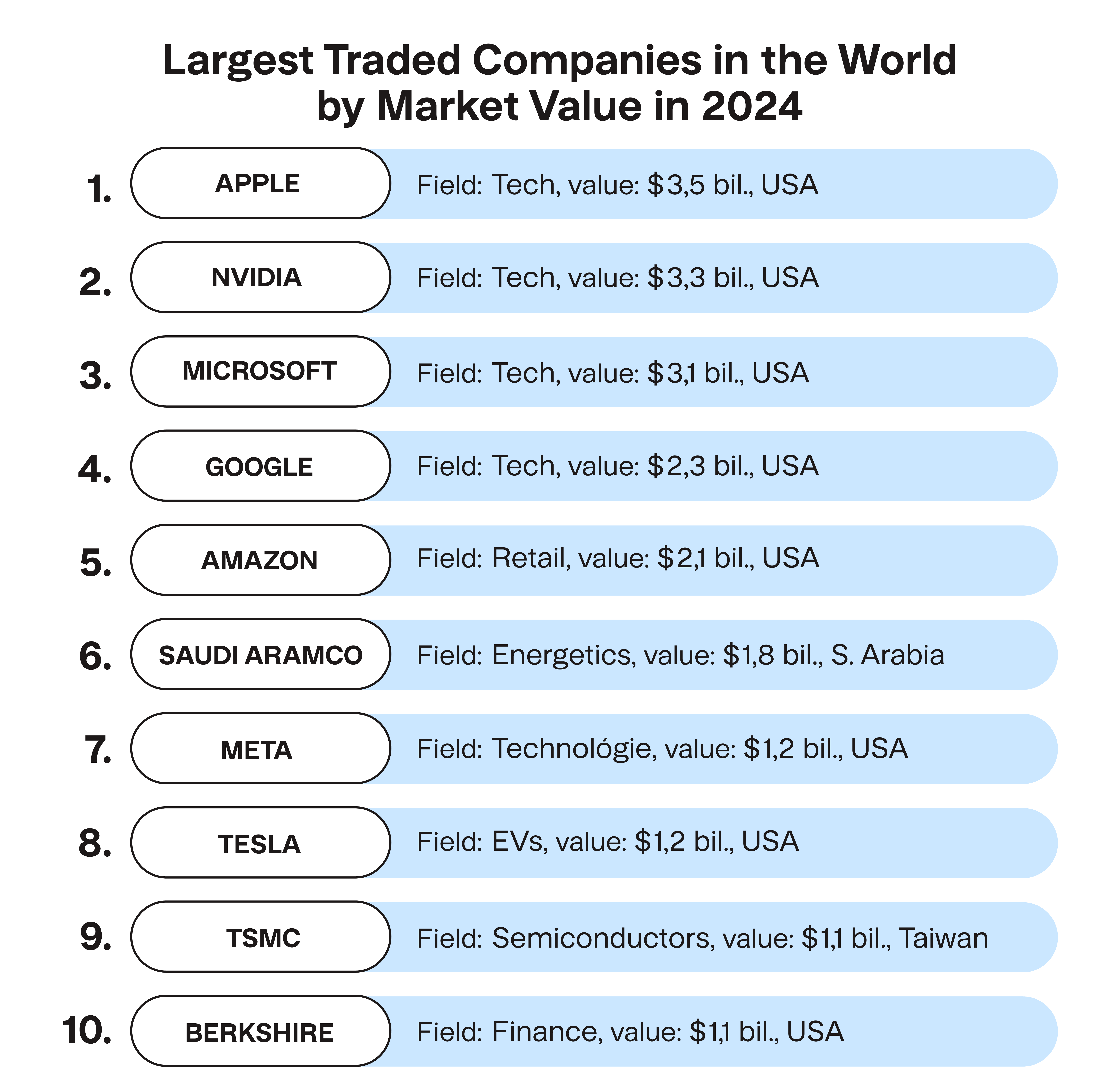
If you could own any of these companies, you probably wouldn‘t say no. Your life would be taken care of for good. Companies listed on the stock exchange are global leaders in their fields. These are the largest companies with revenues and profits in trillions.
To invest means to own these companies. Thanks to the market you can benefit from your daily consumption, and own shares of companies whose products you use daily.
Price is a sentiment - value grows in the long term
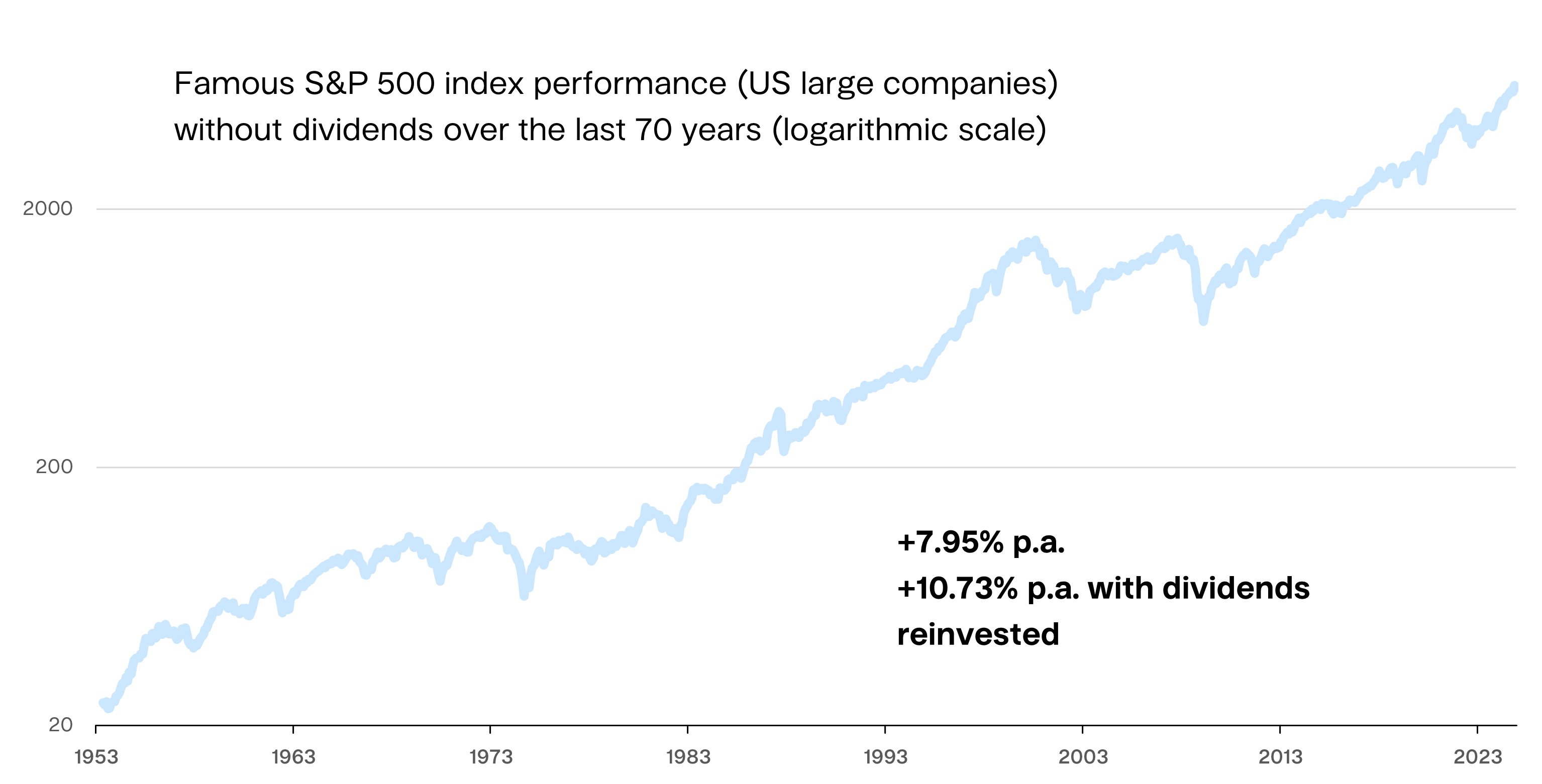
Current direction of the market is irrelevant in the long run. I.e. the longer the time period we’re looking at, the less relevant is the current heading of the market, because in the long run, there is only one direction. Upwards.
The market price of assets reflects mainly the current mood of investors. It rarely reflects their real value. Price fluctuates around the value. Price is a short-term and sensitive indicator. Value is reflected over longer time horizons, and it is more stable.
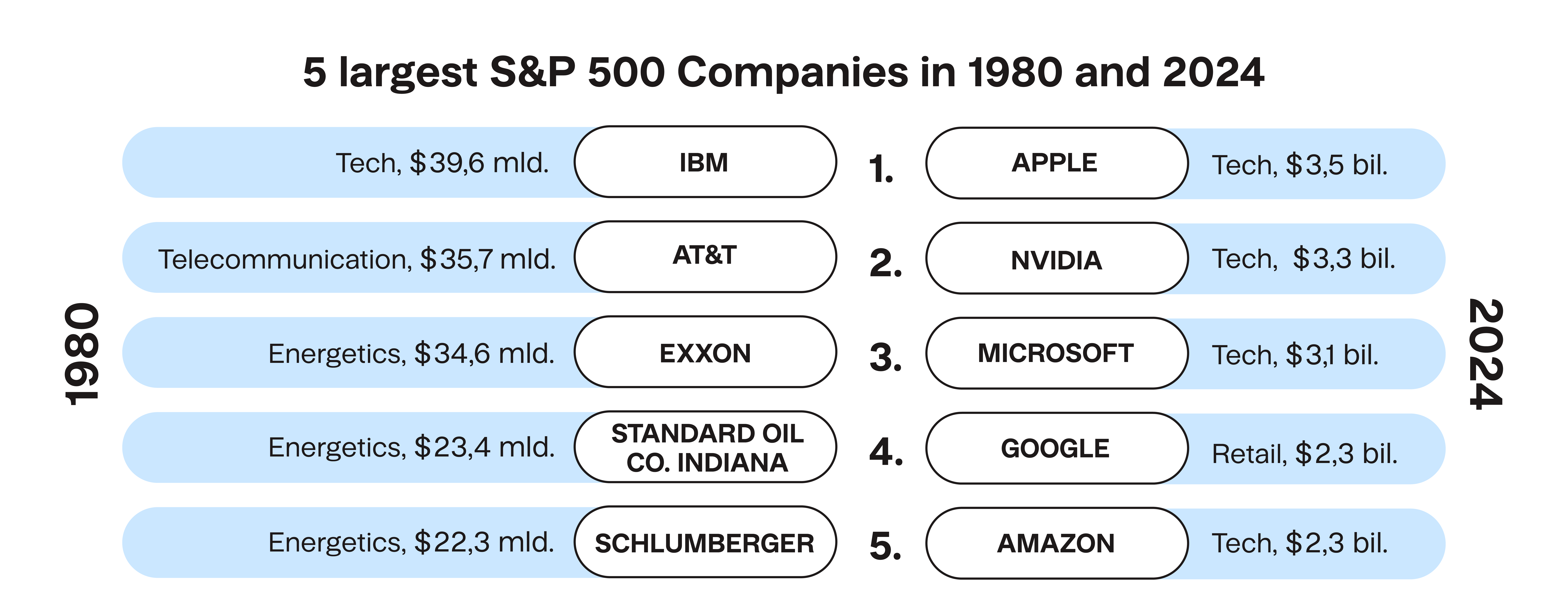
The investor, first of all, has to be interested in the value. In 1980, the top 10 companies of the S&P 500 index combined were worth 236 billion USD. Nowadays, only the largest company of the index, Apple, is worth 3,5 trillion USD.
Economies always grow in the long run and so does the value of securities
As the economies grow, so does the wealth of the world. And this shall persist, with or without you onboard.
One of the reasons for growth is inflation, which is a natural phenomenon in the economy. Inflation means that the prices of goods and services in the economy increase over time.
The world economy is growing because mankind is constantly advancing, innovating and inventing new technologies. Society, by its very nature, is not satisfied with what it has. It still wants more, there is still something to discover and to develop. Unless you stop eating, working, having fun, traveling and doing sports, the world economy will grow and you as an individual can benefit from it.
40 years ago, we couldn’t even dream of a network that would connect all the people around the world. 30 years ago, we had no idea about smartphones, which can now remotely control your household appliances. 20 years ago, we did not believe that cars would be powered by electricity or that we would be making payments through a virtual network. Or that diseases which killed millions of people just years ago, would be just wiped out. Nowadays, we take all these things for granted, but they were fiction only a few decades ago.
Composition of etf funds changes over time, which also ensures their growth
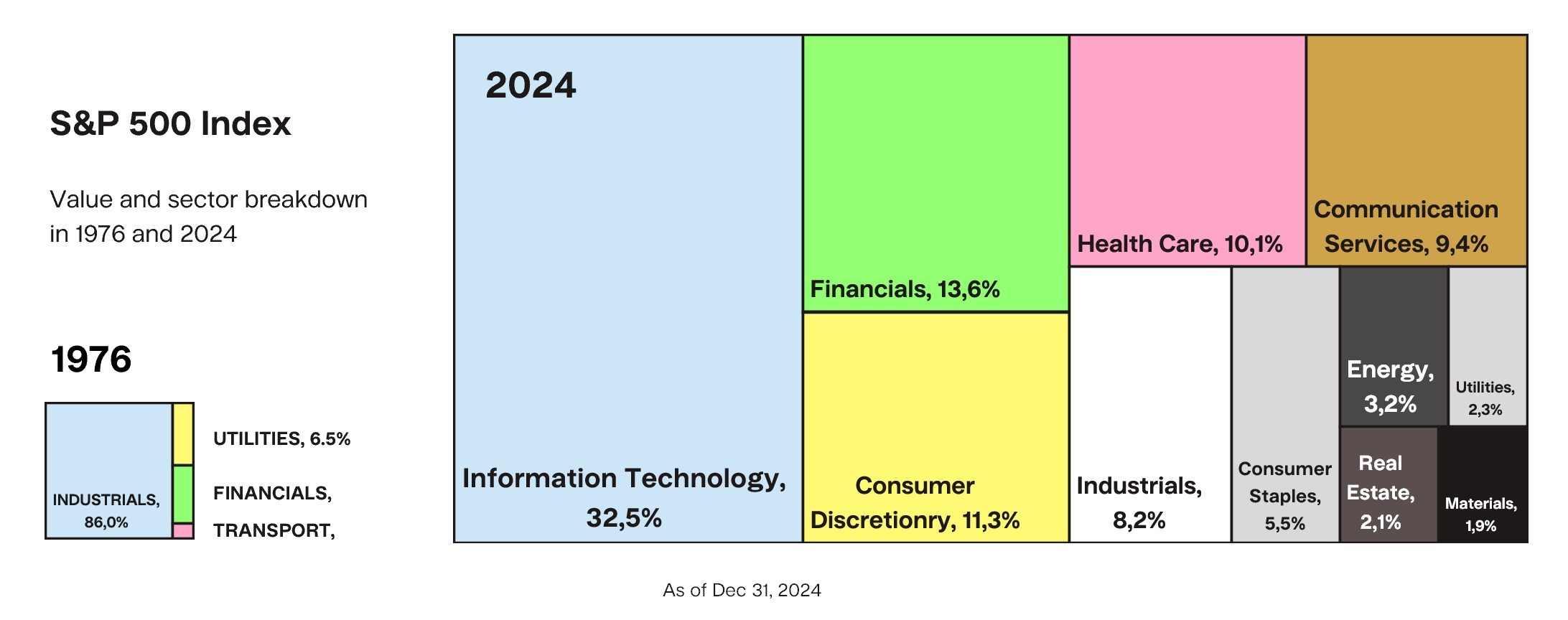
Finax invests into indexes. Imagine an index as a set of shares of several companies, or, perchance, as a representative sample of the market. Their composition changes constantly, as they adjust to the development of the market.
For example, 40 years ago, currently largest companies e.g. Microsoft, Google or Amazon would be nowhere to be seen, even though they are the market leaders nowadays. On the other hand, previously largest companies e.g. Kodak, US Steel, Standard Oil or PanAm do not mean much in the world economy anymore. As a matter of a fact, you wouldn’t find 88 % of the companies that have been listed in the 1955 Forbes Fortune 500 in this list nowaday.
However, that’s exactly the reason to invest into indexes. Only investing into indexes guarantees that your portfolio contains the most successful companies you can find at any given time in the global economy.
Time and allocation beat market risk
Ultimately, time always outweighs the market risk. Just as emotions are the biggest enemy of investing, time is its best friend.
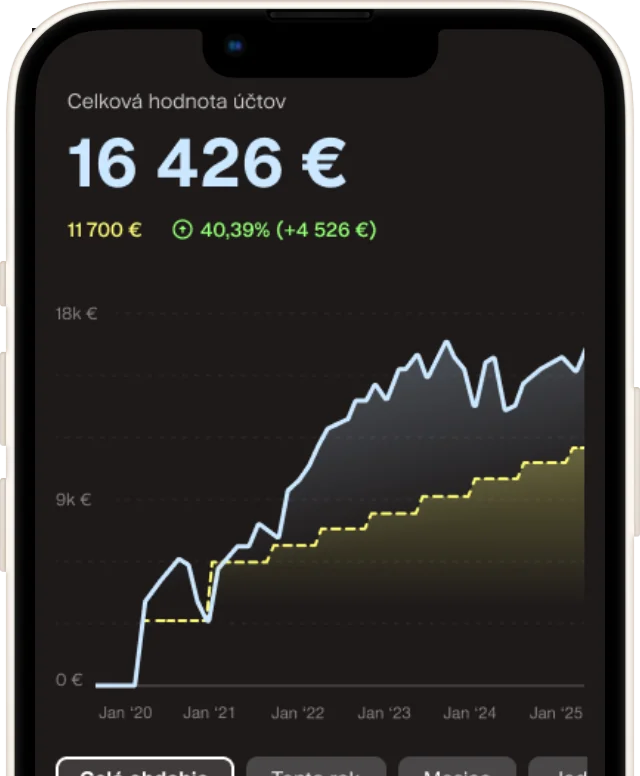
The longer is your investment horizon, the lower the market risk. Indeed, time allows the compound interest to become apparent. With prolonged investment period, the probability of higher profits is increasing.

Create an account and start investing today
It’s important to distinguish between speculation and true investing. Short-term allocation of money in traded assets is speculative by nature, driven by an unpredictable combination of market timing and rapid price fluctuations.
True investing, however, requires a long-term approach where the focus is on growth over time, not immediate gains. The following table shows how likely and how much you would earn in individual Finax portfolios at selected time frames over the last 37 years.
Frequently Asked Questions About Market Risk and Long-Term Investing
1. What is market risk and should I be afraid of it?
Market risk means prices can drop temporarily. It cannot be eliminated, but it has always been overcome - every downturn in history was followed by recovery.
2. Do ETFs reduce market risk?
They don't eliminate it, but global index ETFs spread risk across thousands of companies. If one fails, your portfolio survives. The index automatically replaces weak companies with stronger ones.
3. How does time horizon affect market risk?
The longer you stay invested, the less market risk matters. Short-term prices are driven by emotion. Long-term, economies and company values consistently move upward.
4. Why do markets keep growing long term?
Because human societies never stop innovating. Every decade brings new industries and new value. As long as people work, consume and innovate, the global economy grows.
5. What is the difference between speculating and investing?
Speculation chases short-term price swings - unpredictable and risky. Investing means staying in the market long term, letting compound growth and proper allocation do the work.